Egypt is intensifying its effort to grow the Japanese market at a time when Japanese travellers continue to show strong interest in Egyptian history, culture and local experiences. The opportunity is significant, but converting that interest into sustained tourism growth will require more than promotion: it will require products designed for the Japanese market, stronger air connectivity, deeper cooperation with JATA and tour operators, and a hotel sector prepared to deliver the experience those travellers are buying.
Japan is a market Egypt has never really had to convince of the value of ancient Egyptian civilization. The interest has been there for years. The harder commercial question is what Egypt does with that interest now.
During his visit to Tokyo for Tourism Expo Japan 2026, Tourism and Antiquities Minister Sherif Fathy held meetings with Japanese tour operators, tourism companies and major media organisations to discuss increasing tourism to Egypt. The discussions focused on developing new programmes for Japanese travellers, organising familiarisation trips for Japanese tourism companies and increasing direct flights between Egypt and Japan.
The Ministry is also deepening its institutional relationship with the Japan Association of Travel Agents (JATA). Fathy met JATA’s leadership to discuss increasing Japanese arrivals and explored the possibility of organising incentive trips to Egypt. He also invited the association to hold its annual meeting in Egypt, an invitation that was welcomed by the Japanese side.
So, what is Egypt trying to achieve in Japan?
The answer appears to be broader than simply increasing arrivals. Egypt is trying to move from a market in which Japanese travellers already know the country's heritage to one in which the industry can offer them a wider, more contemporary and more commercially attractive Egyptian experience.
The opportunity is not awareness. It is conversion.
The Japanese market has an unusual advantage for Egypt: the country's cultural proposition is already highly relevant to the customer. During his meeting with JATA, Fathy said Japanese travellers show strong interest in Egyptian culture and ancient civilisation, while also expressing interest in experiencing local life and culture.
That immediately changes the marketing challenge. Egypt does not necessarily need to spend its effort explaining why the pyramids matter; it needs to understand what else a Japanese traveller wants once the decision to visit Egypt has been made.
The Ministry says the average stay in Egypt is around 10 days, creating room to combine cultural, beach, leisure and desert experiences within the same journey. The minister also highlighted growing interest in destinations including Sharm El Sheikh, Hurghada, Luxor, Aswan and the North Coast.
This is where product development becomes more important than promotion. If a traveller already intends to spend around 10 days in the country, the commercial opportunity is to use those days intelligently. A programme that begins with ancient civilisation can potentially extend into local culture, the Red Sea, desert landscapes or contemporary Egyptian experiences, provided the itinerary is practical and the products meet the expectations of the market.
The question then becomes: are Egyptian tourism businesses designing programmes around what Japanese travellers actually want, or are they simply adapting existing programmes and translating the marketing material?
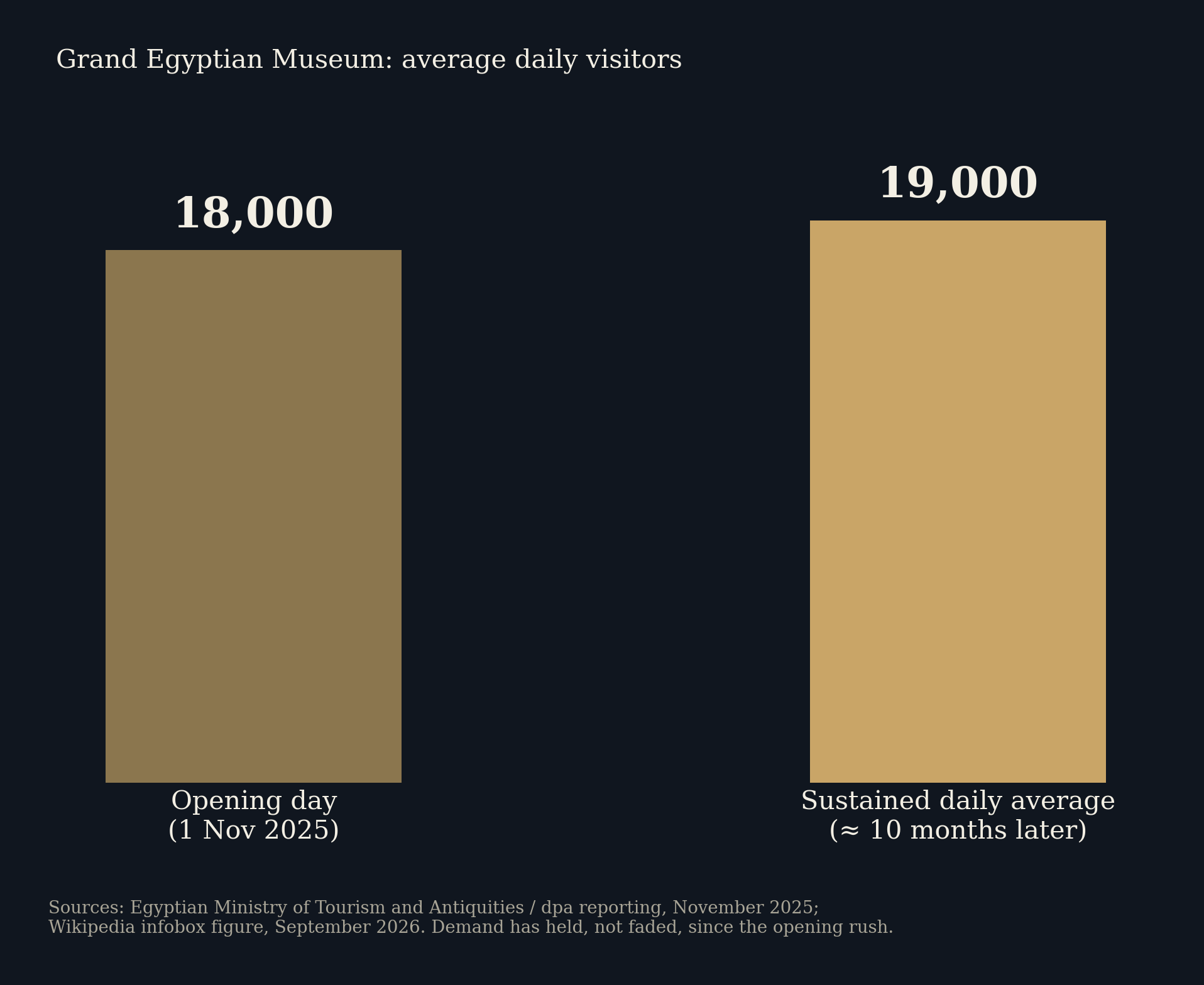
The Ministry’s meetings suggest that the focus is increasingly shifting toward the former. Japanese operators expressed interest in new tourism products, particularly programmes designed for younger travellers and itineraries that combine several Egyptian destinations. They also pointed to growing demand for the Grand Egyptian Museum, while programmes combining Alexandria with Luxor and Aswan are already being offered.
That is an important signal. The market is not necessarily asking for less culture. It may be asking Egypt to package culture differently.
The next challenge is understanding the Japanese customer more precisely.
Japan should not be treated as one homogeneous source market. A younger traveller looking for a different experience is not necessarily buying the same product as a senior cultural traveller, a luxury customer or a corporate incentive group.
The latest discussions point to several opportunities, including younger travellers, cultural tourism, local experiences and Incentive Trips. JATA itself categorises its member companies across specialised segments including cultural tours, UNESCO heritage, incentive travel, extended stays and tours for middle-aged and senior travellers, indicating how diverse the Japanese travel distribution market is.
That suggests a more targeted strategy could be more effective than one broad national campaign.
A cultural traveller may respond to deeper interpretation of Egyptian civilisation and heritage. A younger customer may want local experiences, contemporary destinations and greater flexibility. An incentive group requires a completely different proposition, with hotels, venues, logistics and service standards capable of handling corporate requirements.
The implication for Egypt is straightforward: market segmentation should influence product design, not simply advertising messages.
Then comes the issue Egypt cannot market its way around: connectivity.
Interest does not put passengers on aircraft.
The Ministry's discussions in Japan included increasing direct flights between Egypt and Japan, specifically in response to growing demand. Earlier this year, Foreign Minister Badr Abdelatty also met JATA representatives and major Japanese tourism companies, calling for expanded tourism programmes to Egypt while highlighting increased direct flights between Cairo and Tokyo.
This creates an important commercial relationship between aviation and tourism demand. More promotion can increase interest, but if air capacity does not develop alongside that interest, conversion becomes constrained. For a long-haul market such as Japan, connectivity is particularly important because the traveller is making a larger time and financial commitment before even reaching the destination.
That means Egypt's Japan strategy cannot belong to the tourism sector alone. Airlines, airports, travel companies and hotels all become part of the same equation.
The hotel industry also has to be ready for what the market is asking for.
For hotels, Japanese demand is not simply another room-night opportunity.
The customer arriving from Japan may have different expectations around service, communication, itinerary efficiency, cultural interpretation, food, cleanliness, punctuality and the overall consistency of the experience. Not every property needs to serve this market in the same way, but the hotels that actively pursue it need to understand what the market values.
This is particularly important if Egypt succeeds in expanding beyond traditional cultural circuits.
A traveller combining Luxor and Aswan with Alexandria, the Red Sea or another destination is no longer purchasing a single archaeological experience. The hotel becomes part of a broader journey in which every component affects the customer's perception of Egypt.
That makes the role of tour operators equally important. JATA currently represents more than 1,180 active travel companies, while its membership also includes companies specialising in cultural tourism, incentive travel, extended stays and other specialised products.
For Egypt, a deeper relationship with this network could provide something more valuable than additional visibility: better access to the companies that actually build and distribute Japanese travel products.
Familiarisation trips may be more important than another campaign.
Why does the Ministry want to organise familiarisation trips for Japanese tourism companies?
Because selling a destination remotely has limits.
A Japanese tour operator can study the Grand Egyptian Museum, see photographs of a hotel and review an itinerary from Tokyo. But experiencing the route personally provides a much clearer understanding of travel times, hotel standards, attractions, service quality and how different destinations work together.
This is particularly relevant for Egypt's attempt to diversify its Japanese product.
If the industry wants Japanese operators to sell something beyond the traditional cultural itinerary, those operators need to understand how the alternatives fit into a complete customer journey.
This is also why the Minister's invitation to JATA to hold its annual meeting in Egypt could become strategically useful. Bringing the travel industry itself into the destination would create an opportunity for Egyptian hotels, DMCs, airlines and attractions to engage directly with Japanese decision-makers rather than relying entirely on promotion from a distance.
The Grand Egyptian Museum gives Egypt a strong starting point, but it cannot be the whole strategy.
The museum is particularly relevant to the Japanese relationship because it sits at the intersection of tourism and long-standing Egyptian-Japanese cooperation. Egyptian officials have repeatedly highlighted the role of Japanese cooperation in the museum project, while Japanese interest in the museum has been described as strong by tourism officials and operators.
But this creates another strategic question: does a major new attraction increase the size of the market, or simply strengthen a demand that already existed?
The answer will depend on how the museum is integrated into the wider Egyptian product.
If it becomes another stop within an existing package, its incremental impact may be limited. If it becomes an anchor around which new programmes are designed, the commercial effect could be greater.
This is why the focus on integrated programmes matters.
Egypt may have an opportunity to turn one market into several markets.
The Japanese market could eventually generate different types of tourism business for Egypt rather than one dominant cultural segment.
Cultural tourism remains the foundation. Younger travellers create an opportunity for new experiences. Incentive travel offers a B2B dimension. Luxury tourism creates another value proposition. And combined programmes could encourage longer stays and distribute visitor spending across multiple destinations.
The Ministry has already discussed incentive travel with JATA and Japanese travel agents, while also highlighting Egypt's ability to combine cultural, beach, leisure and desert experiences within an average stay of around 10 days.
The opportunity, therefore, is not simply to increase the number of Japanese visitors.
It is to increase the number of reasons Japanese customers have to choose Egypt.
So how should Egypt measure success?
Arrival numbers will remain important, but they will not tell the complete story.
The more useful measures would show whether Japanese travel demand is becoming broader and more commercially sustainable: the number of programmes sold, direct air capacity, hotel room nights, length of stay, destination combinations, incentive groups and visitor spending.
This distinction is important because Egypt's objective should not be only to grow volume. A well-designed Japanese market strategy could also improve destination diversification and increase the value generated by each visitor.
The Tourism Ministry's broader strategy reflects this direction. At Tourism Expo Japan, Fathy emphasised diversification, sustainability, infrastructure development, digital transformation, investment in human capital and stronger public-private partnerships.
The Japanese market provides a useful test of whether those principles can be translated into commercial results.
Tourism Club View
Egypt's challenge in Japan is not to create curiosity about ancient Egypt. That curiosity already exists, and the current discussions with JATA and Japanese operators suggest continued interest in the destination, particularly in culture and local experiences.
The opportunity is to turn that interest into a more sophisticated market relationship.
That means understanding different Japanese customer segments, developing products around their actual interests, improving direct connectivity, bringing travel professionals to Egypt, preparing hotels for the market and measuring what happens after the promotion ends.
The most valuable outcome would be visible not in another tourism campaign, but in the Japanese distribution system itself: more Egyptian programmes, more destinations, more air capacity, more hotel room nights and more reasons to stay longer.
Egypt already has something Japan wants to see.
The next challenge is making sure the Japanese travel industry knows how to sell everything else Egypt has to offer.
Sources
Ministry of Tourism and Antiquities — Tourism Minister meets Japanese tour operators in Tokyo
State Information Service — Tourism Minister meets Japanese tour operators in Tokyo
Japan Association of Travel Agents — JATA Overview
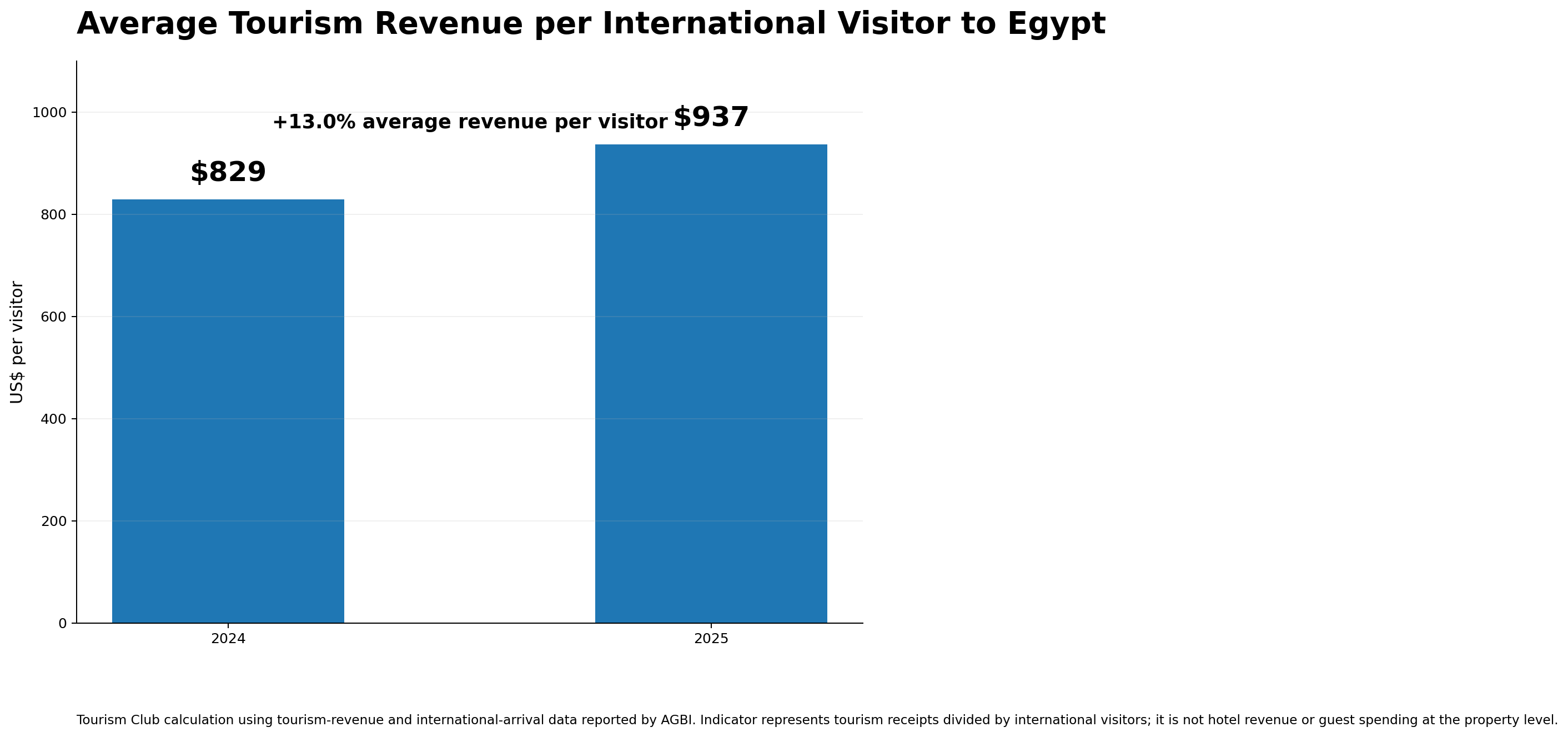 Average tourism revenue generated per international visitor to Egypt, 2024 vs. 2025. Tourism Club calculation from Central Bank of Egypt revenue data and Ministry of Tourism and Antiquities arrivals data, as reported by AGBI, June 2026.
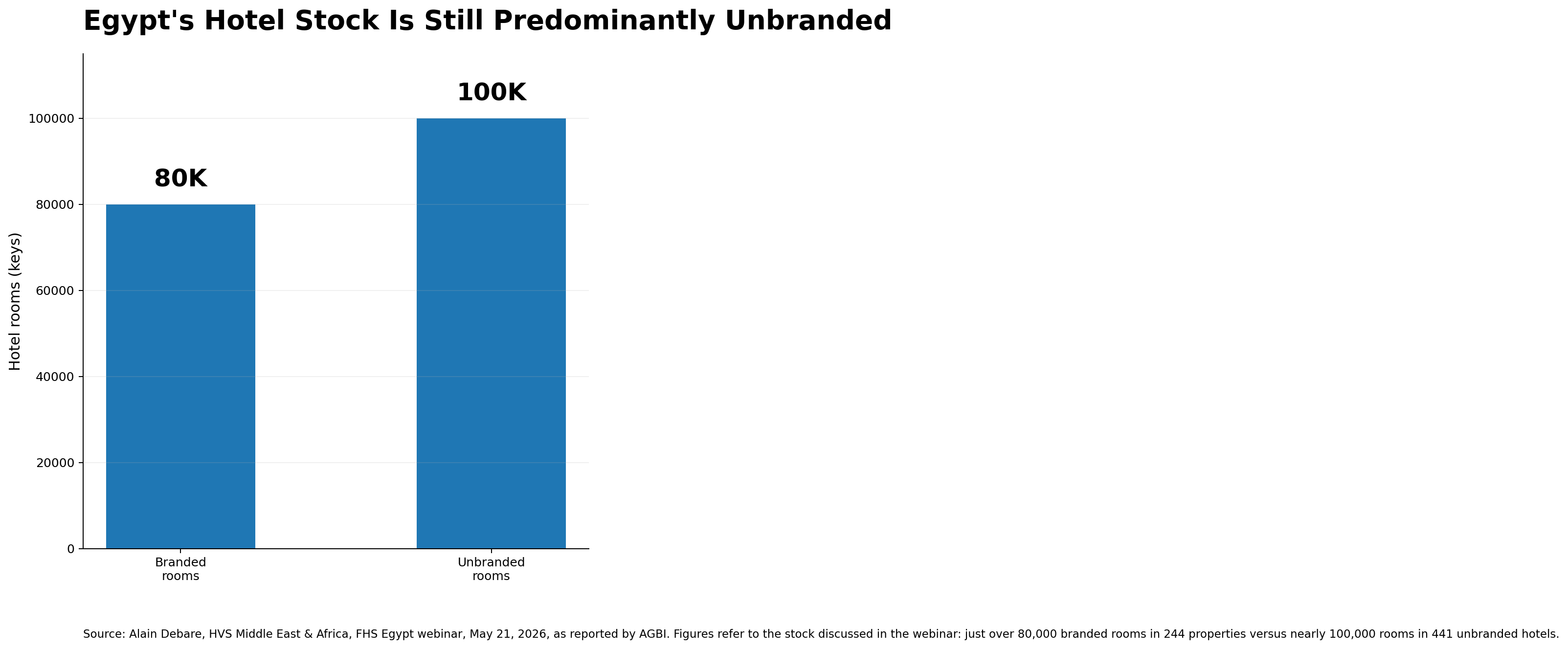 Egypt's branded vs. unbranded hotel stock. Source: Alain Debare, HVS Middle East & Africa, Future Hospitality Summit webinar, May 2026, via AGBI.
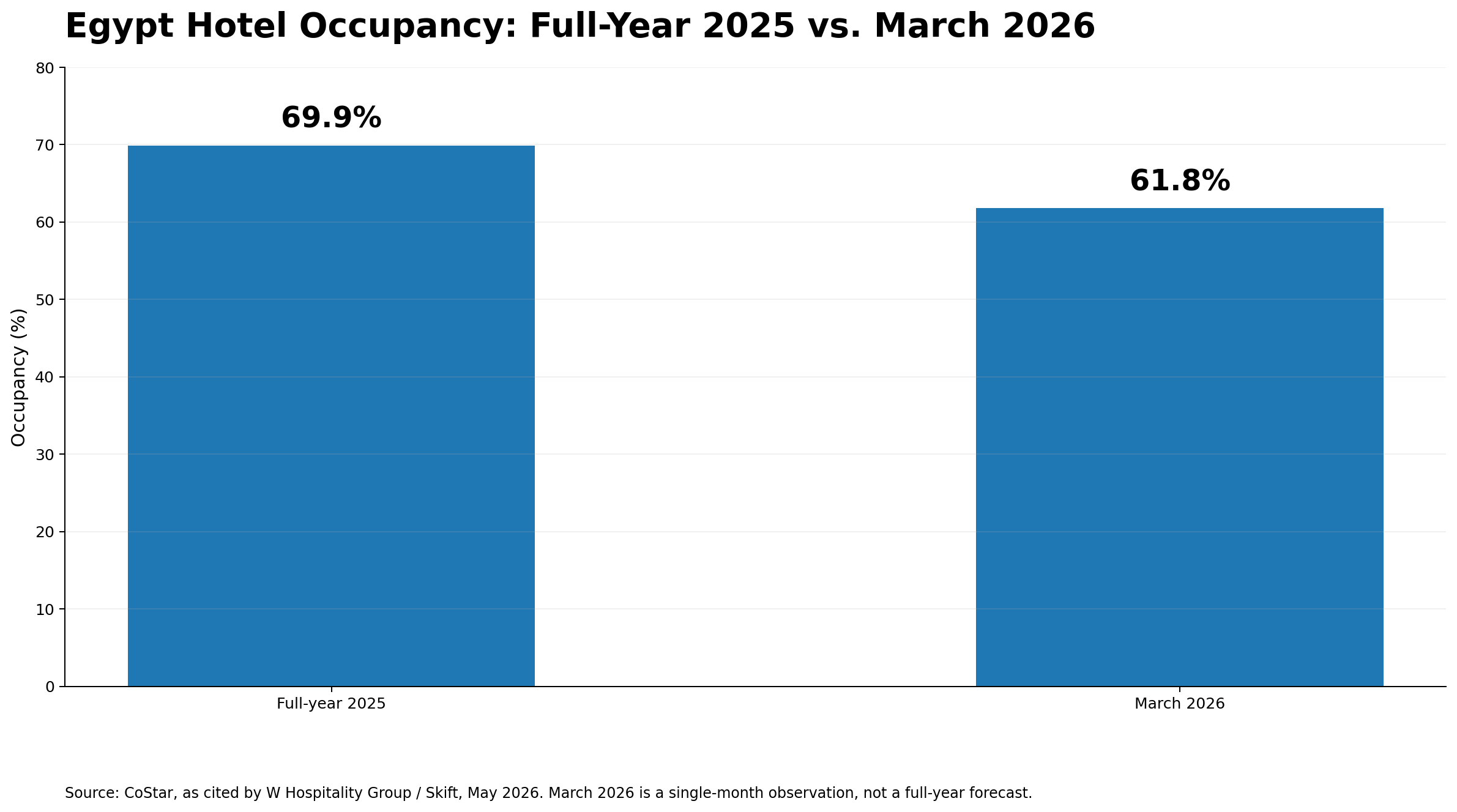 Egypt national hotel occupancy, full-year 2025 vs. March 2026. Source: CoStar, cited in W Hospitality Group / Skift reporting, May 2026.