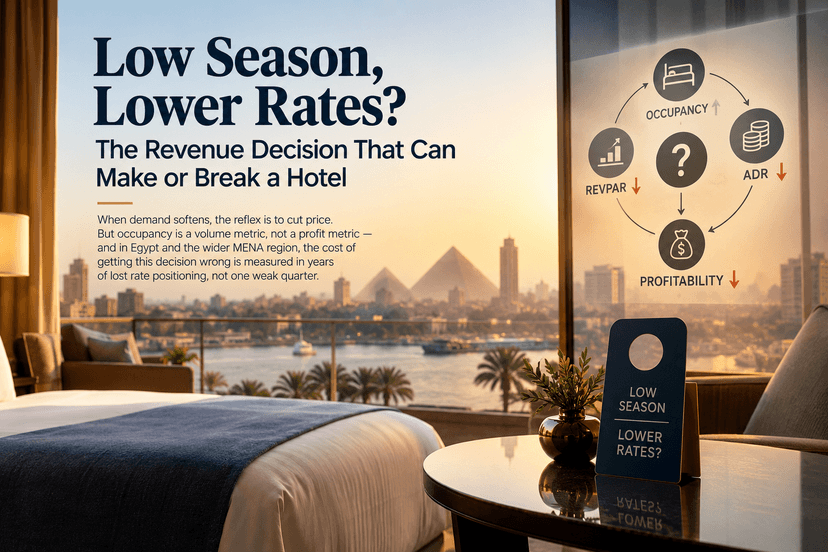
When demand softens, the reflex is to cut price. But occupancy is a volume metric, not a profit metric — and in Egypt and the wider MENA region, the cost of getting this decision wrong is measured in years of lost rate positioning, not one weak quarter.
Every commercial team knows the sequence. The 60-day forecast turns soft. Pick-up slows. A competitor drops its best flexible rate by 18 percent and the rate-shopping tool flashes red on a Tuesday morning. The owner asks why the hotel is nine points behind last year. By Thursday, someone has built a flash sale.
What follows is usually presented as revenue management. Often it is something else: a pricing reflex substituting for a commercial decision. Because the uncomfortable arithmetic is this. A full hotel is not necessarily a profitable hotel — and a hotel protecting its rate at 52 percent occupancy is not automatically disciplined either. It may simply be under-sold. Both errors are expensive. The difference between them is not a philosophy of pricing; it is a diagnosis of demand.
1. The Occupancy Trap
Occupancy is the most emotionally satisfying metric in a hotel and the least informative. It answers one question — how many rooms did we sell — and conceals every question that follows. RevPAR blends rate and volume, and is where most revenue conversations stop. TRevPAR adds what the guest spends beyond the room, where resorts and conference hotels actually live. GOPPAR subtracts the cost of serving those guests, which is where owners live. And net RevPAR, after commissions and acquisition spend, is where the discount usually goes to die.
Take a 200-room city hotel at an ADR of EGP 7,000. Selling 20 extra rooms a night at EGP 4,200 through a third-party channel adds EGP 84,000 gross. Strip out roughly 18 percent distribution cost and that falls to about EGP 69,000. Subtract the variable cost of occupancy — housekeeping, laundry, utilities, breakfast, card fees — typically EGP 700 to 1,200 per occupied room in a full-service property, and the increment lands nearer EGP 50,000.
Worth having, on genuinely incremental business. But it only holds if those 20 rooms would not otherwise have sold. The moment the discounted rate is visible to guests already going to book, the hotel is not buying demand — it is refunding revenue it had already earned. Displace ten of those rooms from the EGP 7,000 rate and the exercise turns negative.
Analysis: the question is never "will this fill rooms?" Almost any discount fills some rooms. The question is what proportion of that volume is incremental, and whether the increment survives distribution cost — something most hotels never measure, because it requires segment-level contribution reporting many properties still do not produce monthly.
2. When Lowering Rates Is Actually the Right Call
Rate reduction is a legitimate instrument. It is simply a narrow one, and its conditions can be specified. It creates real value when demand is price-elastic and undiscovered — a new property in a market that does not yet know it exists, or a destination rebuilding air connectivity. It works against a hard perishability deadline with no alternative demand: the final 72 hours in a short-booking-window market. It works when the objective is explicitly cash flow rather than profit, as for a property servicing debt through a weak quarter. And it works when the offer is fenced — non-refundable terms, advance purchase, minimum stay, a closed user group, or a channel the hotel's base customers do not shop.
Fencing is what separates revenue management from price cutting. An unfenced public rate cut reaches everyone, including every guest who would have paid more; a fenced offer reaches only the customers whose behaviour the hotel is trying to change.
It is least defensible in the mirror conditions: when demand is inelastic (the guest travels for a fixed reason — a contract, a conference, a pilgrimage, a procedure), when the comp set will match within 48 hours, when the hotel holds a positioning premium built over years, and when the shortfall is structural rather than seasonal. A hotel losing share because a competitor opened 300 rooms across the street cannot discount back to its old RevPAR index. It can only redefine what it sells and to whom.
The most damaging pattern is repetition. A property that discounts every February teaches the market that February has a price. Corporate accounts benchmark next year's negotiated rate against this year's distressed public rate; tour operators, contracting 9 to 14 months out, price the following season off the discounted BAR they observed. The rate cut lasts six weeks; the rate expectation lasts three years.
3. What If Price Isn't the Problem?
The proposition worth testing: low season is more often a demand-design problem than a pricing problem.
Before touching rate, a commercial team should answer four questions. Is the hotel losing volume or share? If occupancy is down eight points and the comp set is down nine, this is a market event, and discounting into it destroys rate for no share gain. Is the shortfall concentrated or spread? The collapse of one corporate account or one tour-operator allocation is a sales problem wearing a pricing costume. Is the booking window behaving normally, or has pick-up simply shifted later? Cutting rates in response to a lead-time shift is the most common self-inflicted wound in the discipline. And is the problem demand or capture — bookings never seen, or bookings seen and lost?
Only one of those four diagnoses points to price. The more productive question is usually not "how much should we reduce the rate?" but "who else could buy this room, and what would they need in order to buy it?"
4. Find Different Customers, Not Just Cheaper Customers
Segment economics differ far more than most rate decisions do. An airline crew contract delivers low ADR but near-perfect predictability, minimal distribution cost and zero cancellation risk — and because it is negotiated rather than discounted, it never touches public rate perception. A 21-night relocation guest produces a lower nightly rate with far lower servicing cost per night. A medical-tourism guest in Cairo stays longer, travels with a companion and spends on property. Government demand runs on fixed budgets and fixed dates, won through contracting rather than price signals. MICE is the only segment that can move a whole week of the forecast with one signature — sold 6 to 18 months out, meaning the group that would have rescued next February had to be won last September.
Not every segment fits every hotel. A 500-room Sharm El Sheikh resort cannot fill a summer weekday with corporate transient demand the destination does not generate; a Cairo business hotel cannot rebuild August from the GCC leisure pool driving the North Coast.
5. The Room Rate Is Only Part of the Revenue
A guest is not a room night; a guest is a total economic contribution. In full-service properties here, rooms typically account for 50 to 65 percent of total revenue, the balance in F&B, banqueting, spa and recreation — and HotStats data has consistently placed the Middle East at the top of global profitability rankings, with regional GOPPAR above roughly USD 100, a position built substantially on non-rooms revenue in large resort and conference assets. That changes the discount calculus in a limited way. A half-board family at a softer room rate may outperform a rate-driven transient who sleeps and leaves; a wedding block at a soft rate can be the least important line in a six-figure banqueting contract.
But the logic must be earned, not assumed. Total guest value justifies a lower room rate only when ancillary spend is measured rather than hoped for, when outlets have capacity to serve it profitably at low-season staffing, and when incremental F&B contribution after cost of sales and labour exceeds the rate concession. A discounted all-inclusive guest on a thin food margin is a volume win and a profit loss at once.
6. The Hidden Cost of Distribution
The most persistent illusion in low-season pricing is that a higher ADR is always worth more than a lower one. Kalibri Labs' transaction-level work has repeatedly shown acquisition costs around 13 to 17 percent of revenue for OTA-sourced business against roughly 3 to 8 percent for brand-direct, with net ADR on direct loyalty bookings running several points higher after all costs are netted. Wholesale and tour-operator business sits at the expensive end, with effective take-rates that can exceed 25 percent once net rates and mark-ups are unwound.
Applied to a live decision: a room sold at EGP 6,500 through a channel costing 20 percent nets EGP 5,200. The same room sold at EGP 5,900 direct, at 6 percent all-in acquisition cost, nets EGP 5,546. The cheaper room is the better room. Any hotel deciding on gross ADR alone is optimising the wrong number — and every low season spent buying occupancy through OTA visibility boosters deepens a channel dependency far easier to acquire than to unwind.
7. Revenue Management Meets Sales
No pricing system can manufacture demand nobody went out to generate. Yet in many properties revenue and sales run on different clocks: revenue optimises a 90-day window, sales works a 12-month pipeline, and neither owns the same number. The alignment test is simple. Does the weekly commercial meeting review segment production against target — corporate room nights, group definite versus tentative, tour-operator allocation pick-up, DMC production by source market? Or does it review rate parity and comp-set position? The first is a commercial engine; the second is a pricing committee. Low season is created 6 to 18 months before it arrives and solved in the same window. A hotel that discovers its February problem in January has already lost every tool except price.
8. What Low Season Actually Looks Like in Egypt and MENA
The region is routinely discussed as one market. It is not — the low-season economics of four properties within a few hours' flight of each other diverge almost completely.
Egypt's headline picture is strong. STR reported hotel demand above 45.5 million room nights in 2025 — the highest since records began in 2000 — with occupancy near 70 percent and sector revenues up 46 percent year on year. Branded-hotel ADR reached EGP 6,471, up 31.6 percent, with RevPAR up 43 percent.
Those numbers need careful reading. Much of the EGP-denominated growth reflects the pound's devaluation rather than equivalent gains in hard-currency yield or real margin against imported cost bases. For an owner reporting in EGP, 2025 looks exceptional; for one servicing dollar debt, considerably more ordinary. Observation: revenue managers in Egypt should track real ADR in a stable currency alongside the nominal figure, or they will mistake devaluation for pricing power — and budget accordingly.
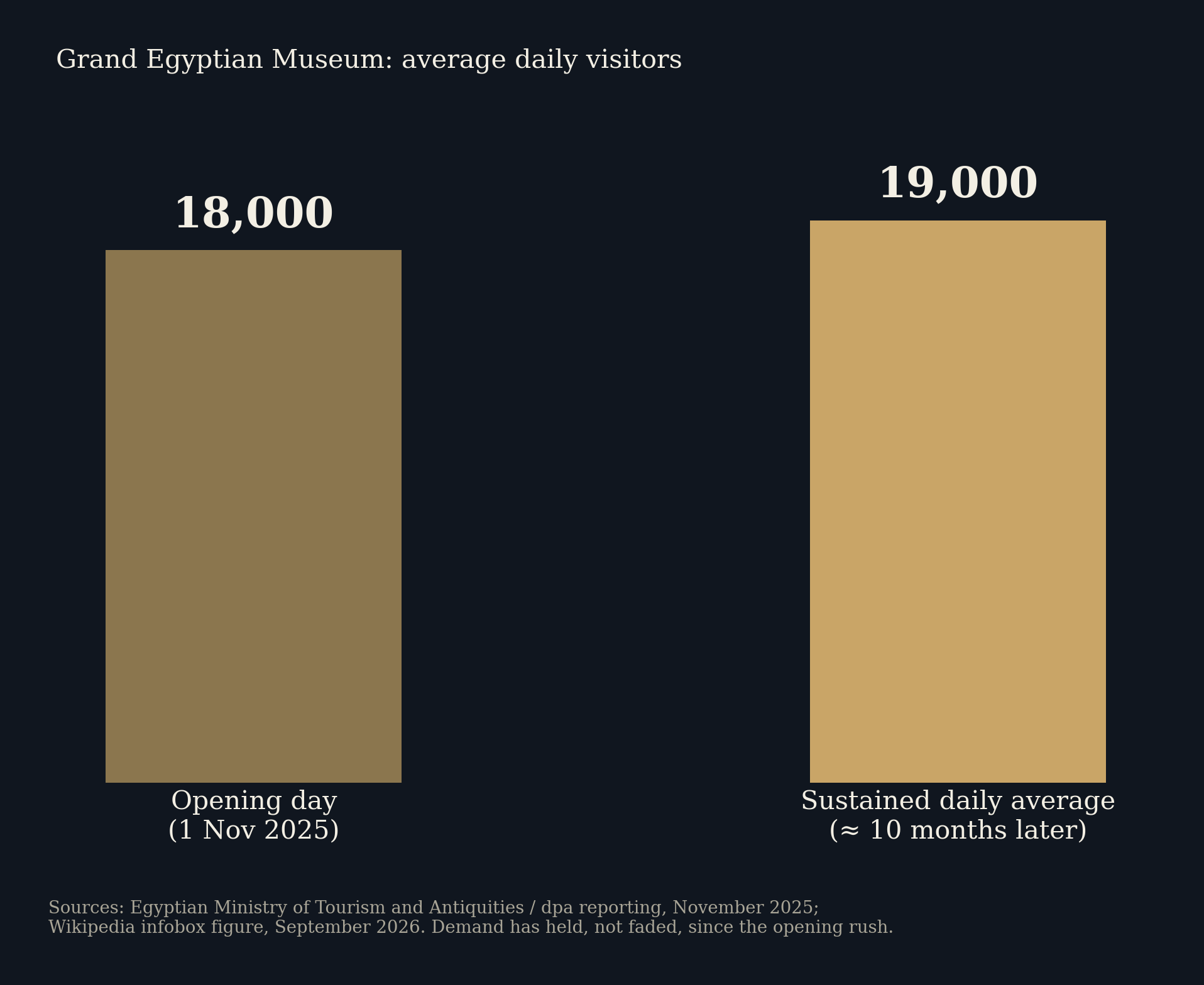
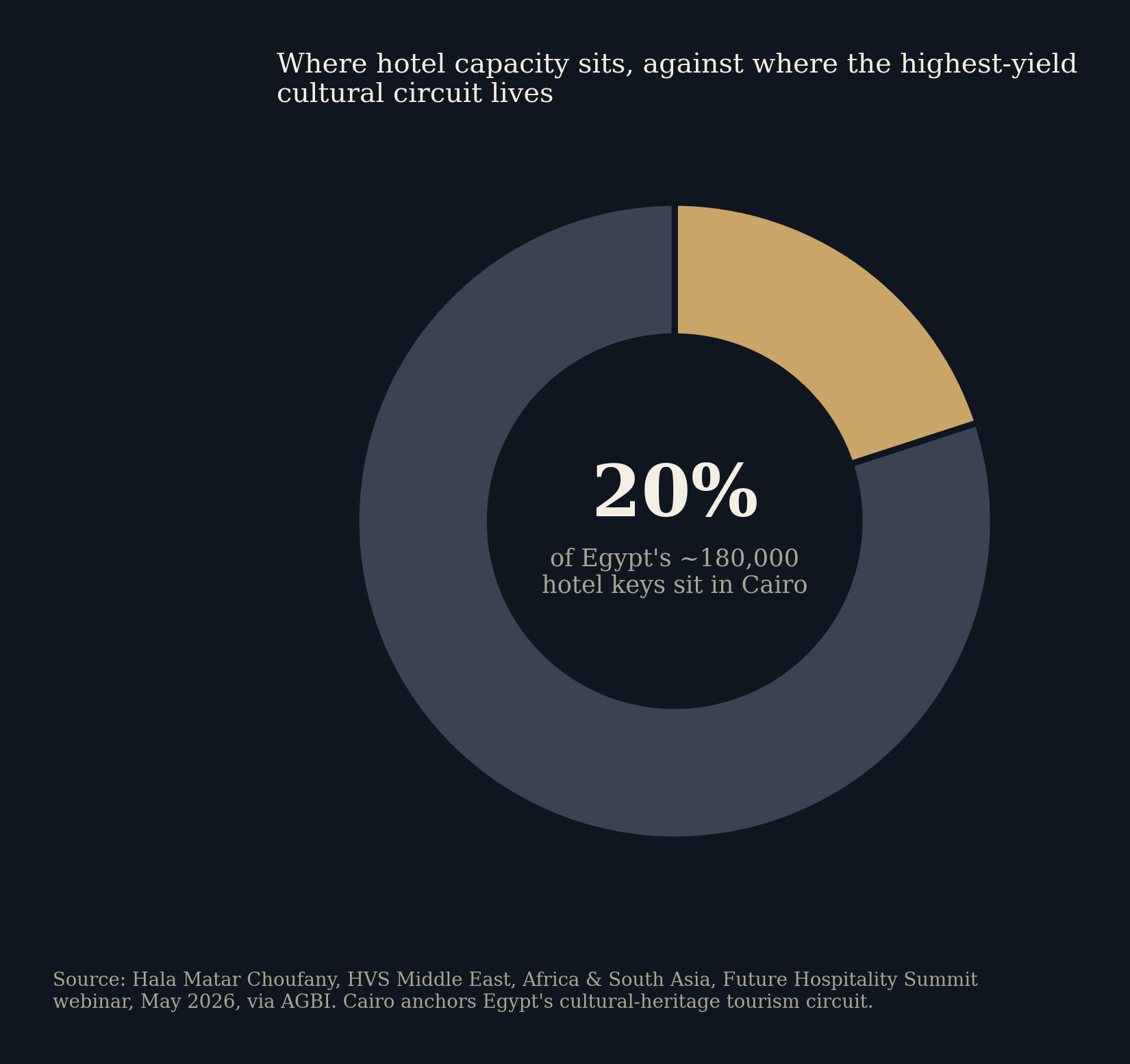
A Cairo business hotel runs on corporate travel, government activity, MICE and a growing leisure flow anchored by the Grand Egyptian Museum. Its weak points are Ramadan daytime business, deep summer heat and the post-New-Year corporate lull. Its levers are account production, group conversion and long-stay — not public-rate discounting into a market where ADR discipline has been hard-won.
A Sharm El Sheikh or Hurghada resort runs on different physics. Demand is contracted through European tour operators far in advance, air connectivity is the binding constraint, and marginal pricing is often set by the operator rather than the hotel. STR recorded March 2025 RevPAR growth of 41.2 percent in Sharm El Sheikh and 34.7 percent in the Hurghada area while eight of the twelve largest MEA countries posted declines — evidence that leisure destinations with a diversified source base can decouple from regional cycles. The strategic question there is not this week's rate; it is source-market concentration and next season's allocation.
Ramadan is the region's most predictable and most mishandled soft period. In March 2025, with the Holy Month falling almost entirely inside it, occupancy rather than rate drove RevPAR declines across most Middle Eastern markets. It moves 10 to 11 days earlier annually — 2027 runs from roughly early February to early March — so its collision point with each market's high season shifts every year, and properties treating it as a fixed calendar event misprice it every year. It is also the one period where F&B, not rooms, is the main opportunity: iftar and suhoor programming can outperform the room ledger outright.
Gulf markets tell another story again. GCC RevPAR rose 7.8 percent year to date through August 2025, helped by an unusual supply slowdown of 0.6 percent against a long-term average nearer 4.5 percent. Yet Riyadh and Jeddah both saw RevPAR decline on softer corporate and government demand, even as Makkah and Madinah advanced on Umrah volume. Saudi Arabia holds roughly two-thirds of the region's rooms under construction. Scenario: when that pipeline lands, both cities face a supply-driven rate correction no tactical discounting will resolve — and hotels that spend the interim training the market to expect discounts will meet it with no rate floor to defend. UAE resorts, by contrast, run their true low season through the summer heat, pivoting to GCC drive-in and resident staycation demand — a rate reduction, but a fenced, segment-specific, F&B-supported one, which is a different instrument from a public rate collapse.
9. What Revenue Managers Should Watch
Forecasting precedes pricing, and the signals that matter in a soft period are not the ones on the rate-shopping screen. Booking pace versus same-time-last-year, by segment, tells you whether demand is absent or merely late — the single most important distinction in low-season decision-making. Segment contribution net of acquisition cost tells you which business is worth defending. Group tentatives and conversion show what is still winnable. Airline seat capacity is the hard ceiling no pricing action can lift. Cancellation rates by channel expose the quality gap behind apparently equal ADRs. And denial and length-of-stay data reveal whether it is inventory controls, not price, turning business away.
Revenue management systems and AI-supported forecasting sharpen the speed and granularity of these readings. They do not supply commercial judgement. An RMS optimising against a mis-specified objective — maximise occupancy, defend index, match the comp set — will pursue the wrong outcome with impressive precision, at machine speed. Technology accelerates the strategy it is given: an argument for better strategy, not less technology.
The Real Question
Behind every low-season pricing decision sits a question belonging to the General Manager and the owner, not the revenue manager: what is this hotel actually trying to achieve this quarter? Protecting profitability, generating cash, defending ADR for next year's negotiations, building a new source market, keeping F&B viable, holding a team together until demand returns — all legitimate, and mutually incompatible. A hotel pursuing cash flow should price differently from one protecting a repositioning. The failure mode is not choosing wrong; it is never choosing, and letting the comp set set the objective by default.
Low season does not automatically mean lower rates. It means lower demand — and lower demand is a diagnosis, not a prescription. Sometimes the answer is a fenced, time-limited discount. More often it is a different customer, a cheaper channel, a longer stay, a group that should have been contracted a year ago, or an honest conversation with an owner about what this asset is worth in February.
The hotels that emerge from a weak season strongest are rarely the ones that filled the most rooms. They are the ones that knew, before they moved the price, exactly which problem they were solving.
Performance data cited from published STR/CoStar, HotStats, Kalibri Labs and CBRE research. Illustrative calculations are the author's own and demonstrate method rather than represent any specific property.


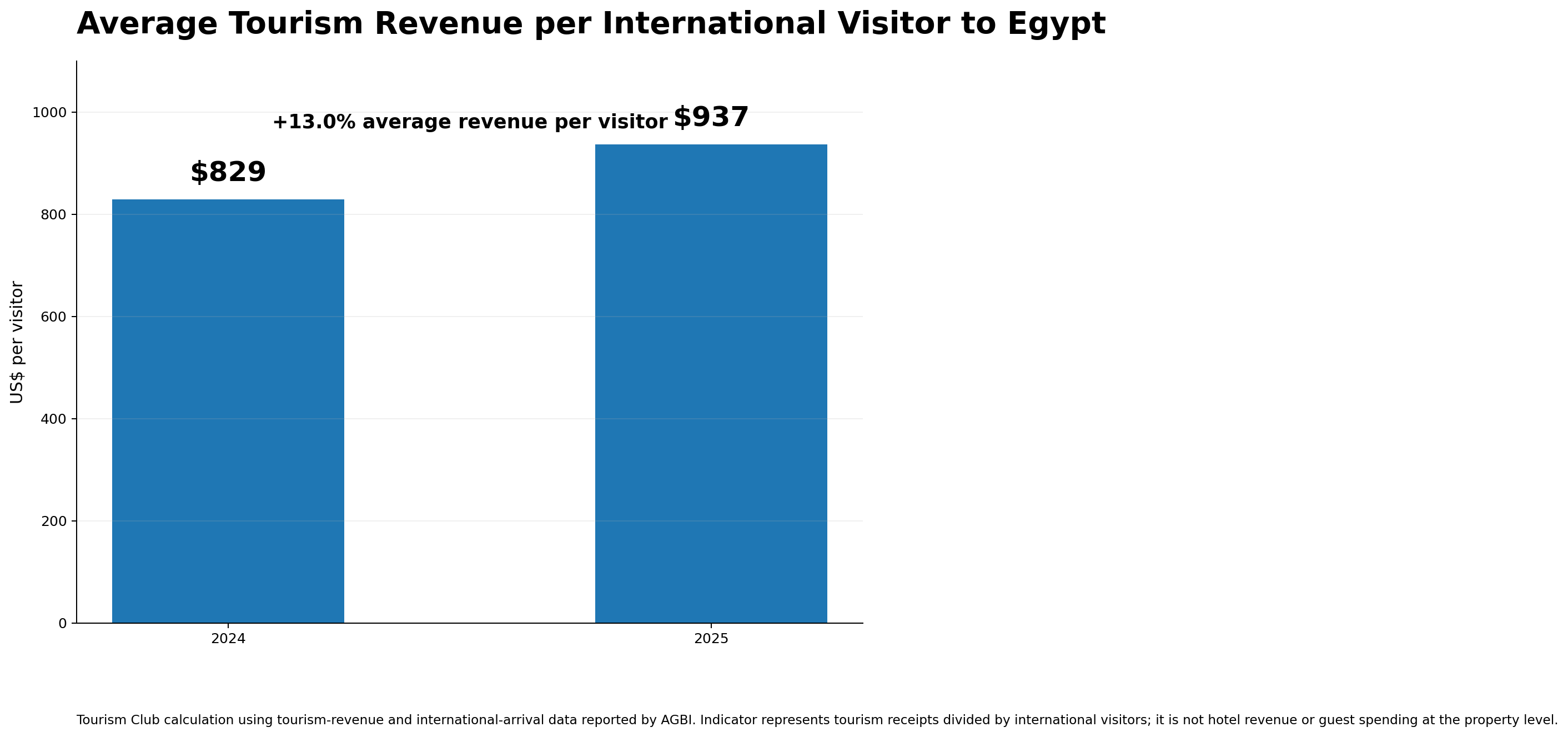 Average tourism revenue generated per international visitor to Egypt, 2024 vs. 2025. Tourism Club calculation from Central Bank of Egypt revenue data and Ministry of Tourism and Antiquities arrivals data, as reported by AGBI, June 2026.
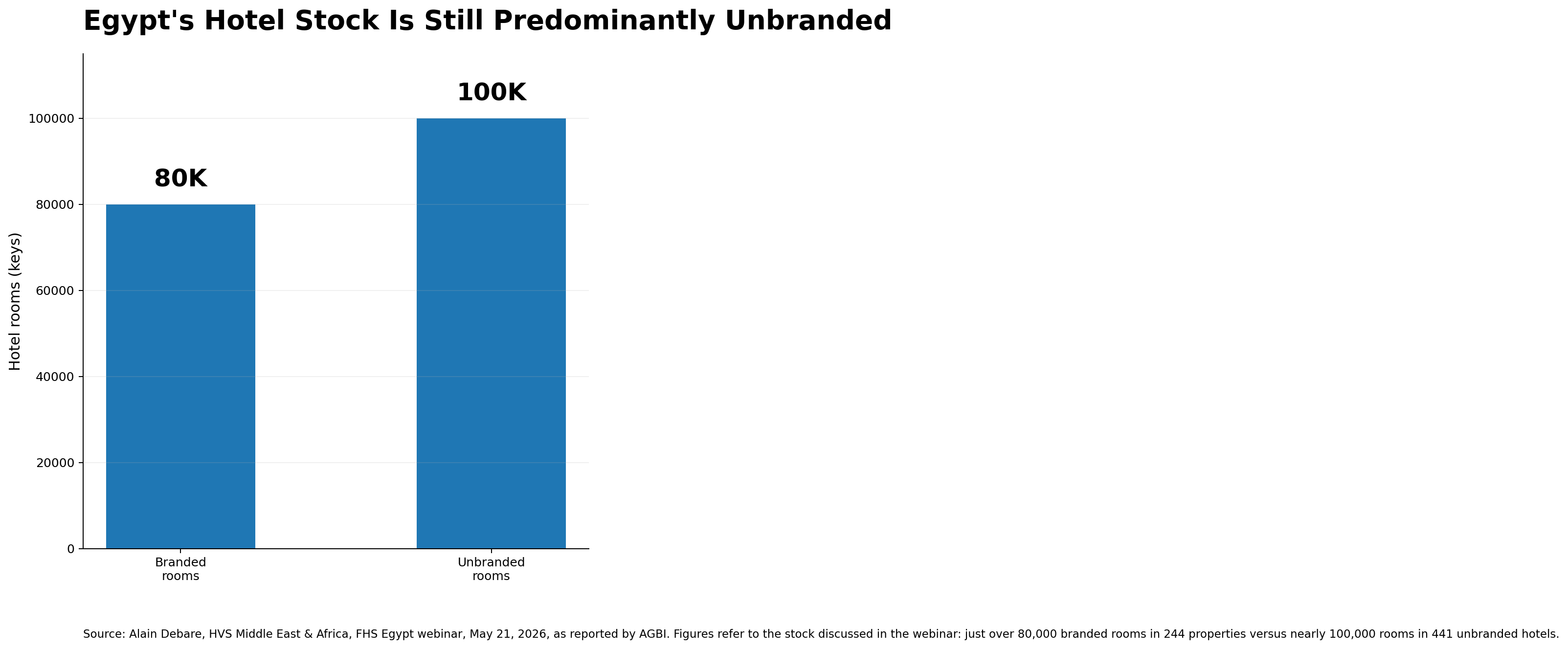 Egypt's branded vs. unbranded hotel stock. Source: Alain Debare, HVS Middle East & Africa, Future Hospitality Summit webinar, May 2026, via AGBI.
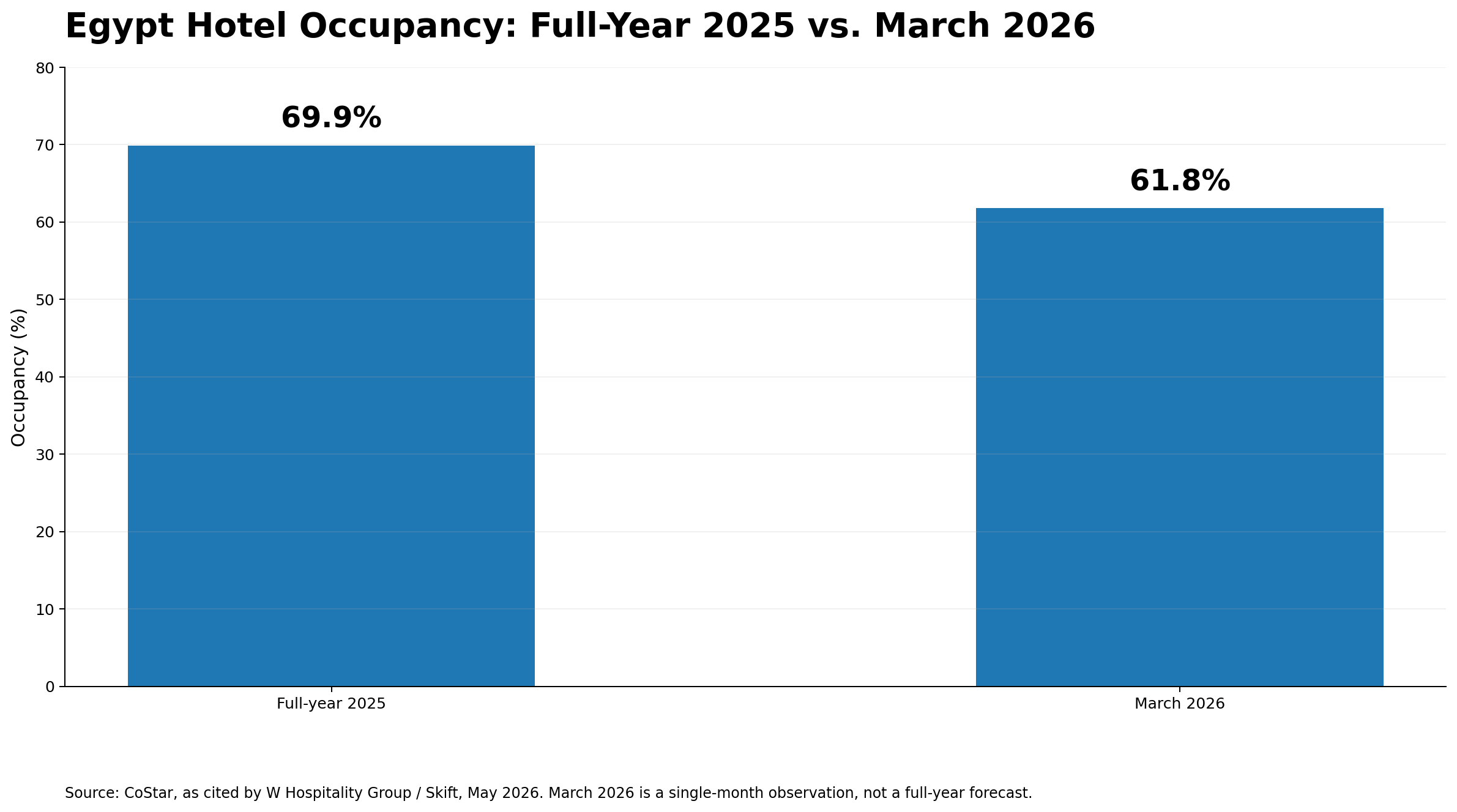 Egypt national hotel occupancy, full-year 2025 vs. March 2026. Source: CoStar, cited in W Hospitality Group / Skift reporting, May 2026.